
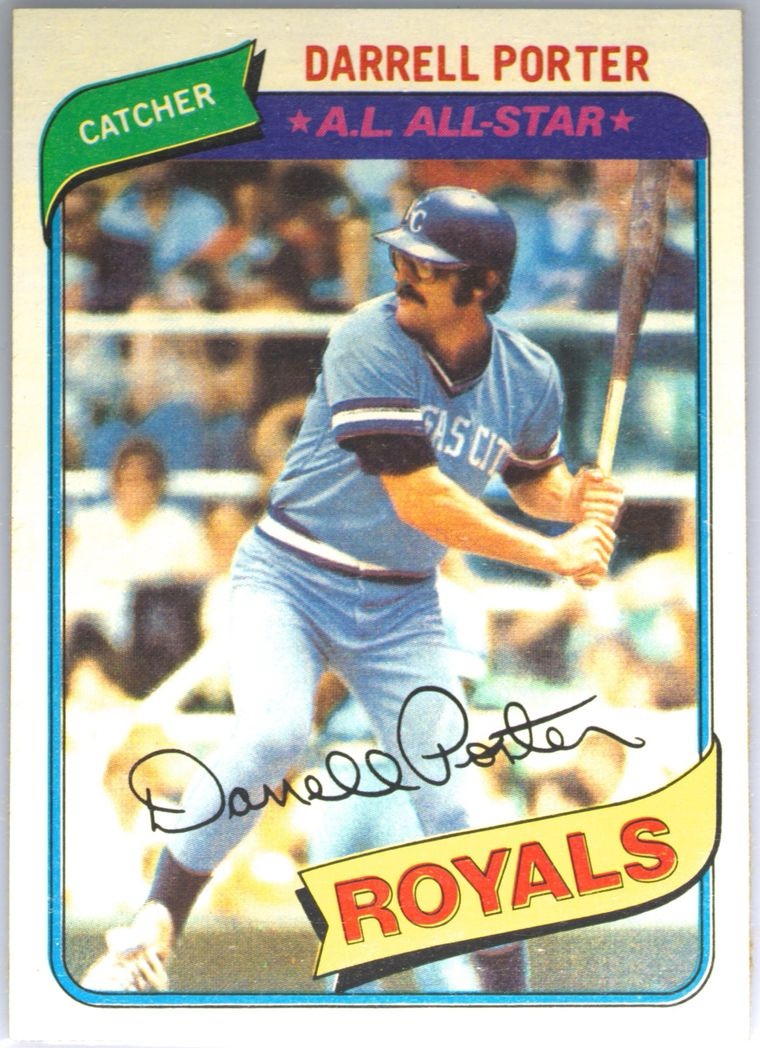
For twenty-five years, the Topps Chewing Gum Company held an effective monopoly on baseball cards in the United States. Through exclusive licensing agreements with Major League Baseball players dating back to the mid-1950s, Topps was, for most collectors, the only game in town. That changed at the start of the 1980s, in a shift that reshaped the hobby permanently.
In 1975, the Fleer Corporation, a rival gum and candy manufacturer, filed an antitrust lawsuit against Topps and the Major League Baseball Players Association, arguing that their exclusive contracts unlawfully shut competitors out of the baseball card market. The case dragged through the courts for years. In 1980, a federal court ruled largely in Fleer's favor, finding that the exclusivity arrangements violated antitrust law. The ruling opened the door for other companies to produce baseball cards featuring active MLB players.
The effects were immediate. In 1981, for the first time in a generation, three companies released baseball card sets simultaneously: Topps, Fleer, and the Donruss Company. Collectors suddenly had a choice, and the hobby that had been defined by a single annual release now had three distinct products to track, compare, and collect each year.
The three brands were far from identical. Topps, with decades of production experience, continued to release the largest and most polished sets, typically numbering in the 700s, with consistent card stock and photography. Fleer and Donruss, entering the market for the first time, both had teething problems. Fleer's inaugural 1981 set became notorious among collectors for blurry or mismatched photographs and a wave of printing errors and corrected variations, many of which are still tracked and collected today. Donruss, meanwhile, used noticeably thinner card stock in its early years and had its own share of production issues, including cards with poorly centered images and rough-cut edges.
Despite these rough edges, the entry of Fleer and Donruss was good for collectors. Competition drove innovation. Card designs became more varied and creative through the decade, and the sheer increase in the number of cards produced each year, three full sets instead of one, gave collectors far more material to pursue, including team and player combinations that had never existed before.
The early 1980s also happened to coincide with the emergence of several players who would go on to have Hall of Fame careers, which is a large part of why the cards from this era remain so collectible today. Fernando Valenzuela's sudden stardom in 1981, Cal Ripken Jr.'s debut in 1981 and subsequent rise to stardom, and the arrival of players like Tony Gwynn, Wade Boggs, and Ryne Sandberg in 1982 and 1983 gave the new three-company era no shortage of star power to capture.
It's worth noting that the 1980s as a whole are sometimes referred to by collectors as the start of the 'junk wax era', a period, generally dated from the mid-1980s onward, when production volumes grew so large that most cards from those later years remain common and inexpensive even decades later. The early years of the decade, 1981 through roughly 1983, sit just before that boom in earnest, which is one reason cards from this specific window, particularly key rookie cards in top condition, have held collector interest better than the flood of cards that followed later in the decade.
Condition matters enormously when it comes to cards from this era. Because Fleer and Donruss cards from 1981 and 1982 in particular were prone to centering and cutting issues at the factory, well-centered, sharp-cornered examples are considerably harder to find than the print runs alone would suggest, and third-party grading from services such as PSA or BGS has become the standard way collectors verify and compare condition.
Whether you're chasing a specific rookie card, trying to complete a full set from one of the three companies, or simply enjoy the history behind this pivotal moment in the hobby, the early 1980s remain one of the more interesting chapters in baseball card collecting, the moment a one-company hobby became a three-company competition, and never looked back.